It is worth while reminding the reader that Iamblichus was not merely a mathematician and a philosopher, in the idealistic fashion: he was of a princely line, and well-educated, and his caste seems to have been that of Brahmin. Iamblichus wrote a life of Pythagoras, an autobiography of his great … Continue reading
Category Archives: Tradition
Making up your Mind

A common criticism of Christians by the pagans, is that the Christian folk religion incorporated elements of the earlier paganism. We have never denied it, to the contrary, we have called attention to it. Furthermore, we have insisted that it is not restricted to folk religion, but also to the greatest minds of the Middle Ages, including Dante and Boethius. This is hardly a reason to reject Christianity, but rather to reject paganism, since everything of value in it has been incorporated into the folk religion, not to mention the esoteric religion Continue reading
The Tetrad
As we have journeyed through each Number, they appear to us like different states of consciousness: in the 1, I see Unity, in 2, I behold the difference between Being and Non-Being, and with 3, I see the deeper harmony of the One-and-the-Many. Of course, neither Unity, Being, nor Harmony … Continue reading
The Triad
When one refers to the Triad, one must remember that: The Triad has a special beauty and fairness beyond all numbers, because it is the very first to make actual the potentialities of the Monad – oddness, perfection, proportionality, unification, limit. We recall that the Dyad is a second Monad, … Continue reading
Vampirism and Vampires

The idea of the vampire cannot entirely be reduced to superstition and extravagant fantasy. To be put aside is vampirism as grossly physical, with blood taken from the victim by the vampire, sometimes with the goal of prolonging his own life. Continue reading
The Dyad

Numbers inculcate the appreciation of metaphysical truths, such as the interplay between Microcosm and Macrocosm: the Moon or the Queen can become or stand in place of the Original Unity, precisely because of the primal unity of the One. Continue reading
Numbers According to Iamblichus
Plato said that no one could be a philosopher who had not studied mathematics. Undoubtedly, this is partially a reference to the Pythagoreans. Having been a mathematical dunce until college (although not innumerate entirely), this is part of my penance, to work through Iamblichus’ treatise. Luckily, this work supplies a … Continue reading
Spiritual Combat and the War on Christmas
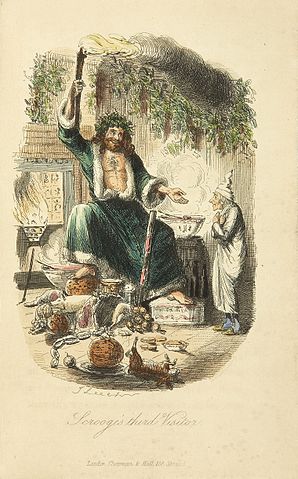
With all the recent publicity about the so-called “war on Christmas”, as it has weirdly become the “holiday that dare not speak its name”, it is easy to forget that there has always been a war on Christmas, ever since Herod. Continue reading