
From Hyperborea to the modern world. Continue reading
From Hyperborea to the modern world. Continue reading

Two birds, inseparably united companions, dwell in the same tree; the one eats of the fruit of the tree, while the other looks on without eating.~ Mundaka Upanishad iii.1 This quote from the Upanishads, which appear at the end of the Vedic period, demonstrates the vague beginnings of the dualistic … Continue reading
Let us be clear. The Primordial State is not a “state of nature” as in Rousseau, but rather of supernature. But if in the Primordial State man lives in harmony with nature and the divine, with a direct awareness of God in his psyche as his life force, and with … Continue reading

There is an intuitive awareness of God and the universal order by clairvoyant vision, just as we now recognize a tree or a mountain by direct experience. Thinking is regarded as another sense, along with sight, hearing, touch or taste. Discursive thought — of the “yes” and the “no”, of the “good” and the “evil” — is not present. Instead, thoughts are experienced as voices from the celestial hierarchies (gods or angels) or communications from ancestors or as commands from rulers. Continue reading

By concentrating and stilling the mind, an opening is prepared for the appearance of Being, or divine inspiration. This may also appear as a creative force to an artist. Continue reading
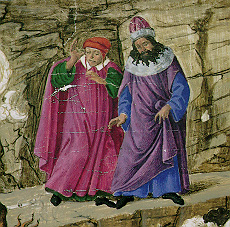
True progress will always respect the line of formal development of man. It will give rise to qualitative civilization such as was the civilization of Greece in the fourth century BC and, in a higher degree, the civilization of Western Europe in the thirteenth century. Continue reading
there is a short but intriguing list of facts that link the ascetics of Egypt and the western fringe of Europe. For example, an early Irish litany makes an enigmatic reference to the “seven monks of Egypt” Continue reading

The point of view of this essay is absolute, that is, metaphysical, sacred, traditional: these three terms are identical for us because they converge in the determination of the same domain, that of transcendental truth Continue reading
Guido Lupo Maria De Giorgio, pseudonym “Havismat” (San Lupo, October 3 1890 – Mondovi, December 27, 1957) was an esoterist and Italian writer. After graduating with a degree in philosophy, he went to Tunisia where he worked as a teacher of Italian. There, he came into contact with Islamic esoterism … Continue reading