The causes of the decline of the Roman Empire, its rectification in the Middle Ages, and future prospects. Instead, the best is the analysis made by De Francisci of the various political and social factors and various attempts of the restoration of the late imperial period. He brings to light … Continue reading
Category Archives: Julius Evola
The Spirit of Roman Civilization (IV)
Roman upheavals, Asiatic cults and the end of the first Romanity. Since we nailed down the truly valuable and, for many, the illuminative, aspect of De Francisci’s new work in these terms, let’s allow ourselves to make some other points. First of all, in regard to origins: It is true … Continue reading
The Spirit of Roman Civilization (III)
Political power, spiritual authority, divine law, sin, divination, totalitarianism and freedom in Ancient Rome. In the order of the structural element, there is a specific element in the “civilization” of Rome, i.e., a hierarchy, in which the preeminence is reserved to political values: everything is assumed and organized in the … Continue reading
The Spirit of Roman Civilization (II)
It is a unitary and organic construction which, by being such, even permeates the political field, i.e., it also presupposes a political organization as the realizer and promoter of the fundamental values resting on the base of the organization itself. And in this special point, we see the contrast between … Continue reading
The Spirit of Roman Civilization
With this article from the December 1940 issue of La Vita Italiana, Evola takes up the idea of Romanity, and its continuity beyond the Roman Empire itself. While different from the mystical vision of Guido de Giorgio, based on Dante, it is equally spiritual. Following a conception of Spengler, the … Continue reading
Men of Destiny
Remembering oneself, discovering the true will, following one’s Dharma, can all be summarized by the ancient call to know thyself. This is what defies every attempt to define or limit Tradition. It is not a question of reading the next book, knowing about Etruscan fertility goddesses, or adopting the very … Continue reading
The idea of pre-existence
To continue the translation of ‘Classical and Romantic ethics’, we present the next two segments. In the first, Julius Evola describes how Catholicism recapitulates within itself the choice between Tradition and modernity. In the second, he provides a succinct summary of the Traditional path. Evola writes: The central view of … Continue reading
The Mystery of Birth Explained
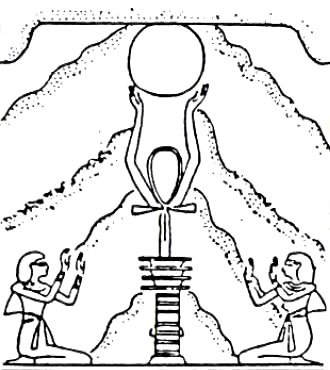
man’s Essence as who he is in himself, his Spirit, his karma (what he carries into the world) and his dharma (his task or destiny in the world). His Existence, then, is the meeting of this Essence interacting with the horizontal forces at the proper time and space suitable to him, by the Law of Elective Affinity. Continue reading
The Mystery of Birth

Two heredities meet and join each other in every being, the one terrestrial and historical, positively detectable to a great degree [i.e., known to science], the other spiritual and otherworldly. Continue reading
The Son of Duty

The oldest son was begotten for the accomplishment of the duty due the ancestors; the others are the fruit of love. Continue reading